
The Martyrs of the Haymarket Massacre
Across the globe, workers gather to celebrate International Labor Day on May 1st. America is an exception, celebrating Labor Day on the first Monday in September. International Labor Day has its roots right here in Illinois history, and as with much of labor history there has been a concerted effort to distort and bury its roots.
On May 1st, 1886, workers in Chicago launched a general strike in the fight for an 8-hour work day. On May 3rd, the police reacted by murdering two rallying strikers at the McCormick Harvesting Machine Company. This was not the first act of state violence against striking workers in the city and it certainly wouldn’t be the last (See the LFFP article on the 1937 Fansteel Sit-down Strike). The next day, a demonstration was called in Haymarket Square where an unknown individual threw a homemade bomb at the line of police officers that had formed to crack the heads of those gathered, who in response opened fire into the crowd, killing 4 and injuring over 70 more. In the aftermath, 8 anarchists were tried and convicted for the bombing, even though the person who threw the bomb was never identified and 6 of the 8 were not even present for the demonstration. It is very clear that these anarchists were not found guilty for their participation, but instead for their commitment to the labor movement. Four of the accused were sentenced to death. For their willingness to die for the movement, they became known as the Haymarket Martyrs. The trial and subsequent executions were condemned internationally, and this international aspect is one of the reasons that in 1894 the US government implemented a split from the rest of the international community to celebrate labor day in September.
In 2026 we find ourselves in an era of labor relations where the owning class thinks that they can get away with stripping back the protections that our ancestors died for. The 8-hour work day, 5 day work week, workplace safety protections and even child labor laws are all under attack, and we in the labor movement cannot let what our ancestors fought for slip through our fingers. This is why it is important to remember the struggle of those who came before us, why we must never stop telling their stories and learning from their efforts. The martyrs are buried in the Forest Home Cemetery in Forest Park.
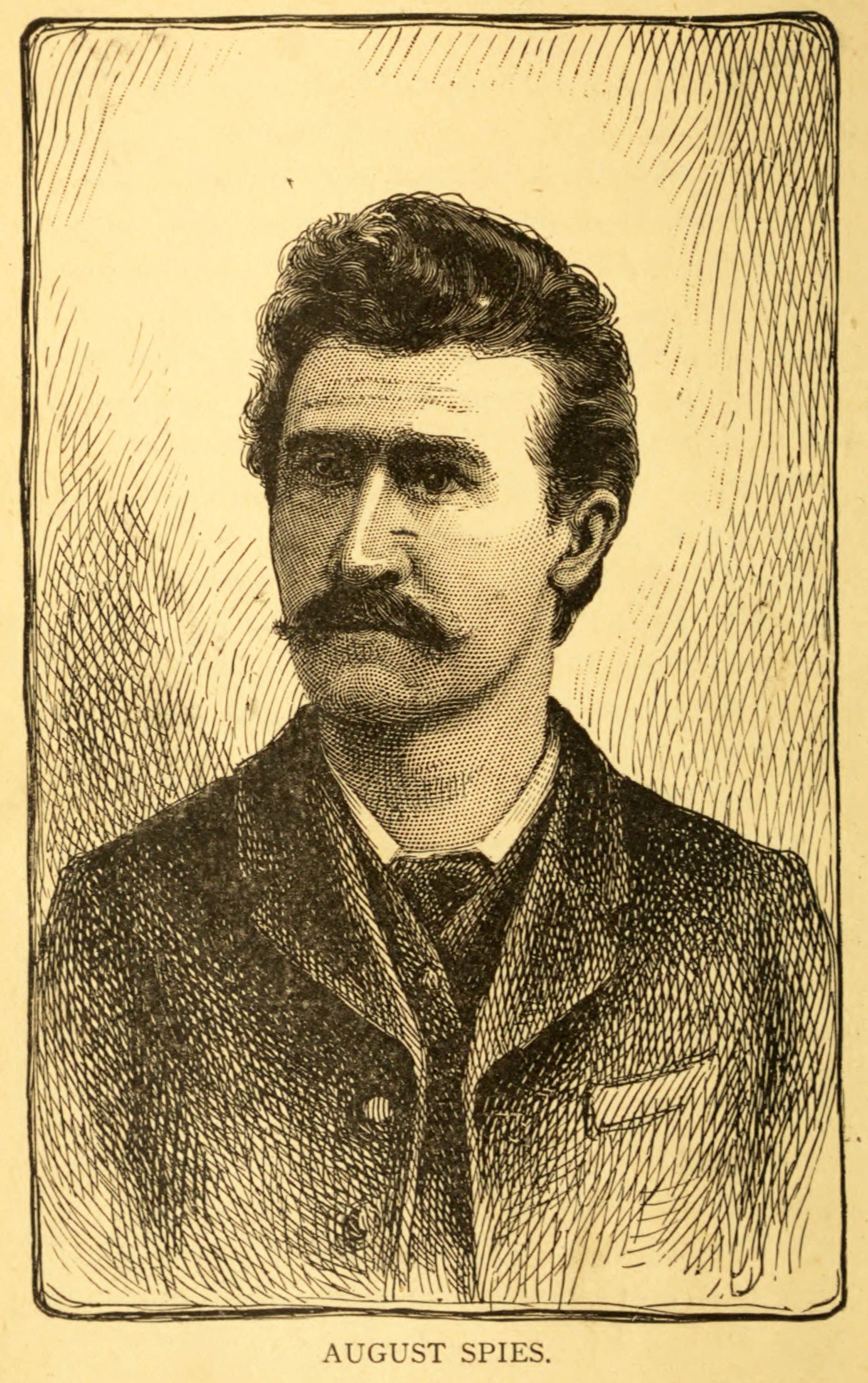
August Spies (1855-1877)
“The time will come when our silence will be more powerful than the voices you strangle today.”
Born in Germany, August Spies immigrated to Chicago in 1873. He organized in Chicago as a member of the Socialist Labor Party. Spies worked as the editor for the anarchist Arbeiter-Zeitung (Workers’ Newspaper). On the night of the Haymarket Affair, he gave a passionate speech about the importance of the 8 hour workday. He was ultimately executed on November 11, 1887.
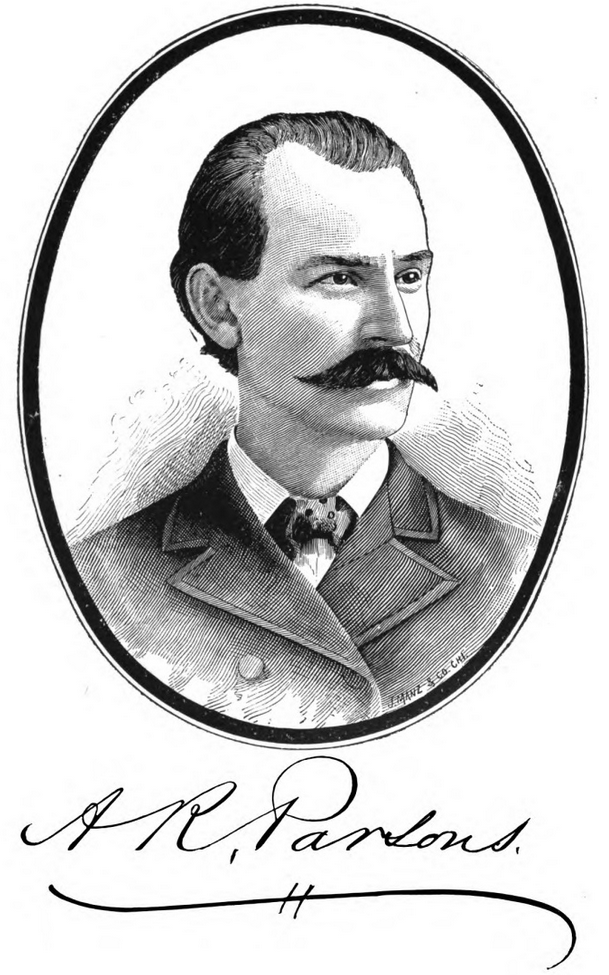
Born in the American South, Albert Parsons traced his ancestry to those who arrived via the Mayflower. He credited his ancestors as being early revolutionaries in the founding of the United States. Initially, Parsons served in the Confederate Army during the American Civil War. However, following his service, he changed his views, and supported the abolition of slavery.
After moving to Chicago with his labor organizer wife, Lucy Parsons, both of them worked for the anarchist publication The Alarm. Albert worked as the newspaper’s editor and Lucy as a talented writer.
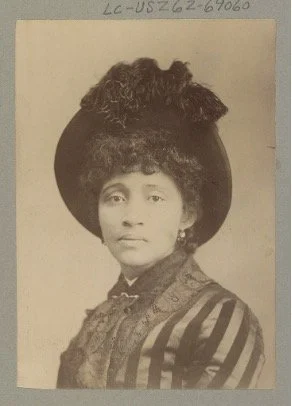
As an enslaved Black, Indigenous, and Mexican American woman born in Texas, Lucy Parsons advocated for an end to racism and sexism. She saw socialism as the solution to ending the discrimination that she faced. Her political views grew and developed throughout her lifetime, from a socialist, to an anarchist, and eventually to a communist.
Both Albert and Lucy excelled at public speaking, drawing others in with their fiery speeches. Lucy Parsons was also one of the founding members of the Industrial Workers of the World (IWW).
The state executed Albert Parsons for his involvement with the Haymarket Affair on November 11, 1887. Lucy Parsons reflected that her husband’s “only crime was that he lived in advance of his time.” In today’s world, it’s easy to see how she was right. The 8 hour workday is standard in many industries, thanks to the efforts of the Haymarket martyrs, and all those before them who built the foundation of the labor movement, our contemporary comrades, and to those who will follow.
Although she was not a martyr in the Haymarket Affair, Lucy Parsons deserves to be remembered not only for her own organizing work, but also for how she commemorated the Haymarket martyrs. She traveled across the country prior to the martyrs’ execution, demanding they be freed. After her husband’s death, she raised their two children on her own, while continuing her work as an organizer. When her home caught fire in 1942, Lucy sadly passed away. Today, she is remembered as a passionate advocate who fought for worker’s rights, women’s rights, and for an end to racism.
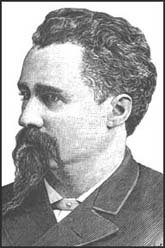
Oscar Neebe (1850-1916)
“The rich got richer and the poor got poorer; that is the tactics of harmony between capital and labor.”
Born in New York City to German immigrant parents, Oscar Neebe’s education abroad in Germany greatly shaped his life. Just as the American Civil War ended, he returned to the United States having completed his studies. Neebe first worked as a tinsmith, then in a factory at the Adam’s Westlake Manufacturing Company in Chicago. While there, his employer fired him when he began to unionize with his fellow workers. Neebe watched as Chicago employers, such as the McCormick Reaper Plant, made promises to their workers and later broke them without a thought, leaving the workers to fend for themselves. He witnessed the police collaborate with these employers in the interest of capital. Fed up with laboring for the capitalists, Neebe later started his own business, the Acme Yeast Company. Besides trying to organize factory workers, Neebe organized brewery workers, and was a part of the Chicago Central Labor Union. He served 6 years of his 15 year prison sentence in Joliet for his involvement in the Haymarket Affair. Pro-labor Illinois Governor John Peter Altgeld felt sympathetic, and pardoned Neebe in 1893 alongside Michael Schwab and Samuel Fielden.
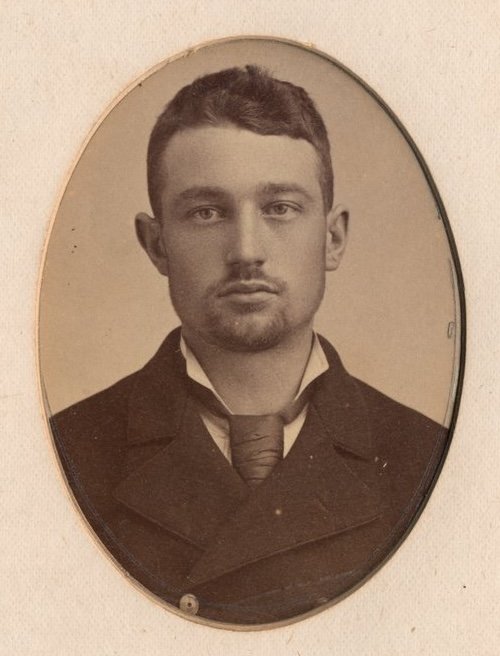
Louis Lingg (1864-1887)
“It did not escape my observation that the former employer of my father, grew continually richer…whilst, on the other hand, my father, who had performed his respective part in creating the wealth his employer possessed, and who had sacrificed his all, which was his health…was cast aside like a worn-out tool which had fulfilled its mission and could now be spared.”
Born in Germany in 1864, Lingg was the youngest of the eight Haymarket martyrs. Following his father’s serious workplace injury in a lumber mill when Lingg was a boy, Lingg witnessed his father’s employers begin to pay less and less as his father adjusted to life with a disability. Lingg was only 13 years old when his father passed away as a result of complications from the workplace injury.
Lingg apprenticed as a carpenter, and was part of the socialist German National Workingmen’s Union before immigrating to Chicago in 1885. He promptly became a member of the International Carpenter’s and Joiner’s Union as well and labored in a factory as a carpenter. Lingg’s employer fired him when its employees went on strike, and Lingg refused to be a scab. This further motivated Lingg’s advocacy for worker’s rights. Following the Haymarket Affair, Lingg passed away in his jail cell before the trial. While it was ruled he lost his life to suicide, to this day faul play is suspected, as he was hoping to also receive a pardon from Governor Altgeld. Lingg is remembered as “‘the most dangerous anarchist in all Chicago’” for he dared to dream of a better world in which all are equal.
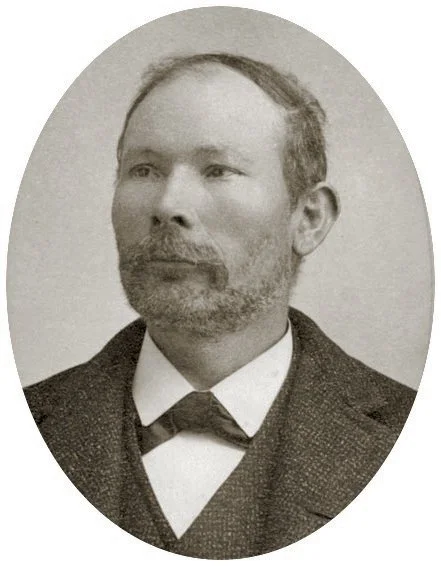
George Engel (1836-1887)
“Chicago is a place where I heard something of socialism for the first time in my life.”
Born in Germany, George Engel experienced poverty and the loss of his immediate family at a young age. His father died when Engel was only a baby, and his mother passed away when Engel was 12. At age 14, Engel finished his schooling in Germany, and began his apprenticeship as a painter. Engel came to America in 1873. He found work as a painter, but shortly became sick. While he was ill, Engel received support from the German Aid Society to take care of his wife and children. Engel became an anarchist after a coworker in Tembruth’s wagon factory introduced him to the German socialist newspaper, Die Vorbote (The Harbingers). Later on, he opened a small toy store. While he was not present on the day of the Haymarket Affair, Engel was still tried and faced execution on November 11, 1887 for dreaming of the 8 hour workday.
“Anarchism does not mean plunder and outrage upon society; contrarily, its mission is to outroot the systematical plunder of a vast majority of the people by a comparatively few-the working classes by the capitalists.”
Born in Germany and immigrating to the United States at the age of 15, Adolph Fischer worked at multiple German language newspapers, including the anarchist Arbeiter-Zeitung (Worker’s Newspaper), and Der Anarchist (The Anarchist). He was also a member of the German Typographical Union. Shaped by his father’s views as a socialist, Fischer later came to identify himself as an anarchist. While Fischer helped organize the meeting at Haymarket, he was not present when the bomb exploded. The state executed Fischer on November 11, 1887.
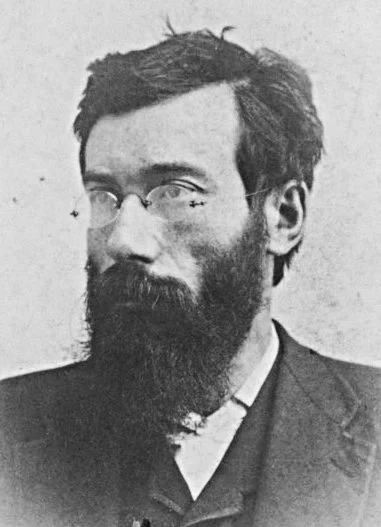
Michael Schwab (1854-1898)
“It did not take long to make a socialist of me; the leaders of the union were socialists and worked for their principles.”
Born in Germany, Michael Schwab worked in the book-binding industry after he finished school, and was active in the union at his workplace. One of his colleague’s friends was a socialist, and thanks to him Schwab learned about socialism. Through his work in the union, Schwab helped to win a reduction in their working hours from a 12 hour day to an 11 hour day. Before moving to the United States, he traveled throughout Germany, Austria, and Switzerland, where he witnessed the struggles of working class folks toiling for meager wages in factories. When Schwab arrived in the United States, he became active in the movement for the 8 hour workday, and worked at the Arbeiter-Zeitung (Worker’s Newspaper). Although he initially received the death penalty for his involvement in the Haymarket Affair, he was not executed. Pro-labor Illinois Governor John Peter Altgeld felt sympathetic, and pardoned Schwab in 1893 alongside Neebe and Fielden after they served 6 years in the Joliet prison.
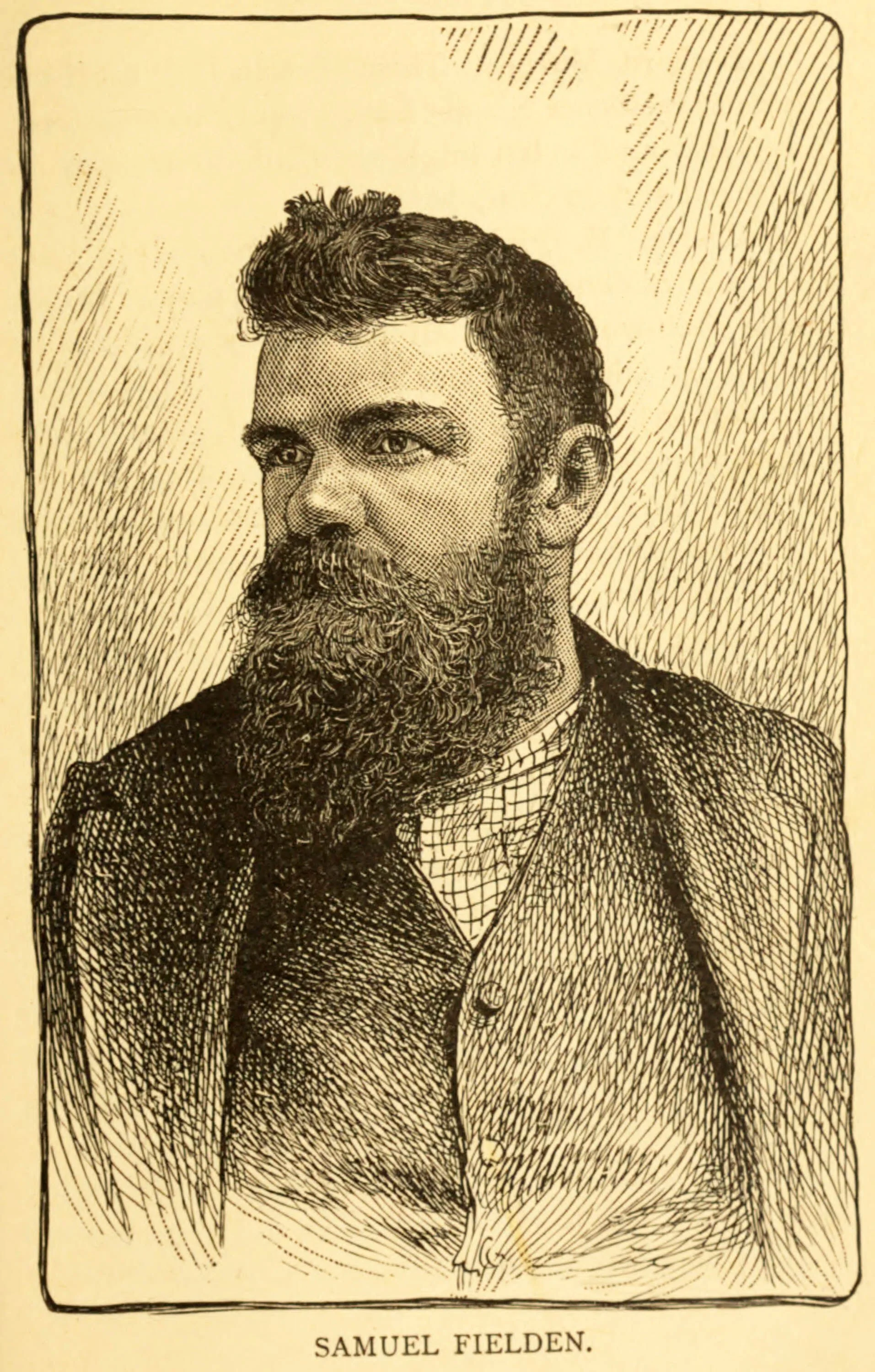
Samuel Fielden (1846-1922)
Samuel Fielden grew up in an English manufacturing town where he witnessed the gap in living conditions between capitalists and the working class. He grew up in a Methodist family and worked in a cotton mill starting at the age of 8 years old. Upon moving to the United States, he worked on a farm as well as on the Illinois & Michigan canal. He became involved with the International Working People’s Association, and was also a member of Chicago’s first Teamsters Union. As an anarchist, Fielden was tried for his involvement in the Haymarket Affair, but pro-labor Illinois Governor John Peter Altgeld felt sympathetic, and pardoned Fielden in 1893 alongside Neebe and Schwab after they served 6 years in the Joliet prison.
Sources
https://www.loc.gov/resource/sn85033295/1887-11-16/ed-1/?sp=3&r=-0.358,0.032,1.379,0.754,0
https://theanarchistlibrary.org/library/lucy-e-parsons-life-of-albert-r-parsons
http://dwardmac.pitzer.edu/Anarchist_Archives/bright/aparsons/bio.html
https://foresthomecemeteryoverview.weebly.com/albert-parsons.html
https://www.loc.gov/item/2004671731/
https://files.libcom.org/files/Oscar%20Neebe.pdf
https://www.findagrave.com/memorial/12289240/oscar-william-neebe
https://files.libcom.org/files/Louis%20Lingg_0.pdf
https://images.chicagohistory.org/asset/11352/
http://dwardmac.pitzer.edu/Anarchist_Archives/haymarket/Engel.html
https://commons.wikimedia.org/wiki/File:George_Engel_portrait_2.jpg

https://libcom.org/article/fischer-adolph-1858-1887-autobiography
http://dwardmac.pitzer.edu/Anarchist_Archives/haymarket/Engel.html
https://files.libcom.org/files/Michael%20Schwab.pdf
https://commons.wikimedia.org/wiki/File:1886_Photo_Michael_Schwab.jpg

http://dwardmac.pitzer.edu/Anarchist_Archives/haymarket/Fielden.html
https://digital.library.illinois.edu/items/f18cd830-1a05-0134-1d6d-0050569601ca-5
http://dwardmac.pitzer.edu/Anarchist_Archives/haymarket/spiesauto.html